Are Stone Surfaces Hard to Maintain? A Guide for Malaysians on Stone Cleaning, Sealing & Stain Removal.
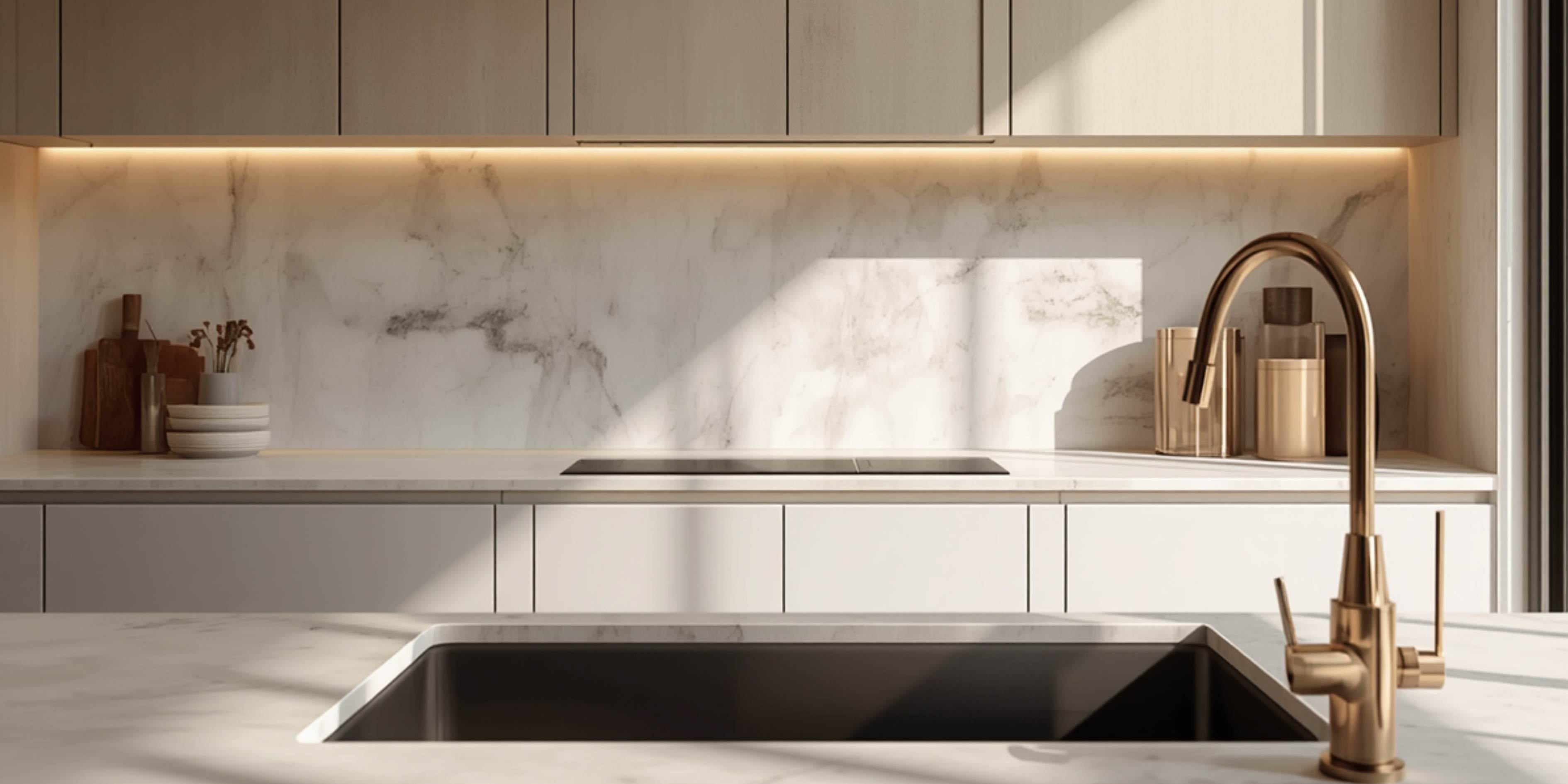
Stone surfaces can stay beautiful for many years when they are cleaned and maintained according to the material manufacturer's recommendations.
However, there is no single cleaning method that works for every type of stone.
These are the usual stones that we frequently see in Malaysia: 1. quartz stone, 2. sintered stone, 3. granite, 4. Marble. Each stone material has different maintenance requirements. Some natural stones may require sealing, while certain engineered surfaces are designed to require minimal sealing or no routine sealing.
For Malaysian homes and commercial spaces, regular cleaning is particularly important because kitchens, bathrooms and other surfaces are exposed to food, grease, humidity, spills and everyday use.
This guide explains how to clean stone surfaces, how to approach common stains, when sealing may be required and what to avoid.
Why Does Stone Surface Maintenance Matter?
Stone is often selected because of its durability and long-lasting appearance.
But even a durable surface can become stained, scratched, dull or damaged if the wrong cleaning products or methods are used.
Good maintenance helps to:
Keep the surface looking clean
Reduce the build-up of grease and dirt
Prevent certain stains from becoming difficult to remove
Preserve the surface finish
Maintain hygiene in kitchens and bathrooms
Extend the visual lifespan of the surface
The most important rule is simple:
Always maintain the stone according to its specific material, finish and manufacturer's recommendations.
Step 0: When in doubt, check with the manufacturer.
Before cleaning a stone surface, identify what material you have.
Stone Material | General Maintenance Consideration |
Quartz Stone | Usually easy to maintain with suitable non-abrasive cleaning methods |
Sintered Stone | Generally low maintenance; follow product-specific cleaning recommendations |
Granite | Cleaning is straightforward, but some products may require periodic sealing |
Natural Marble | More sensitive to acids and staining; sealing and careful cleaning may be required |
Other Natural Stone | Maintenance varies significantly by stone type and finish |
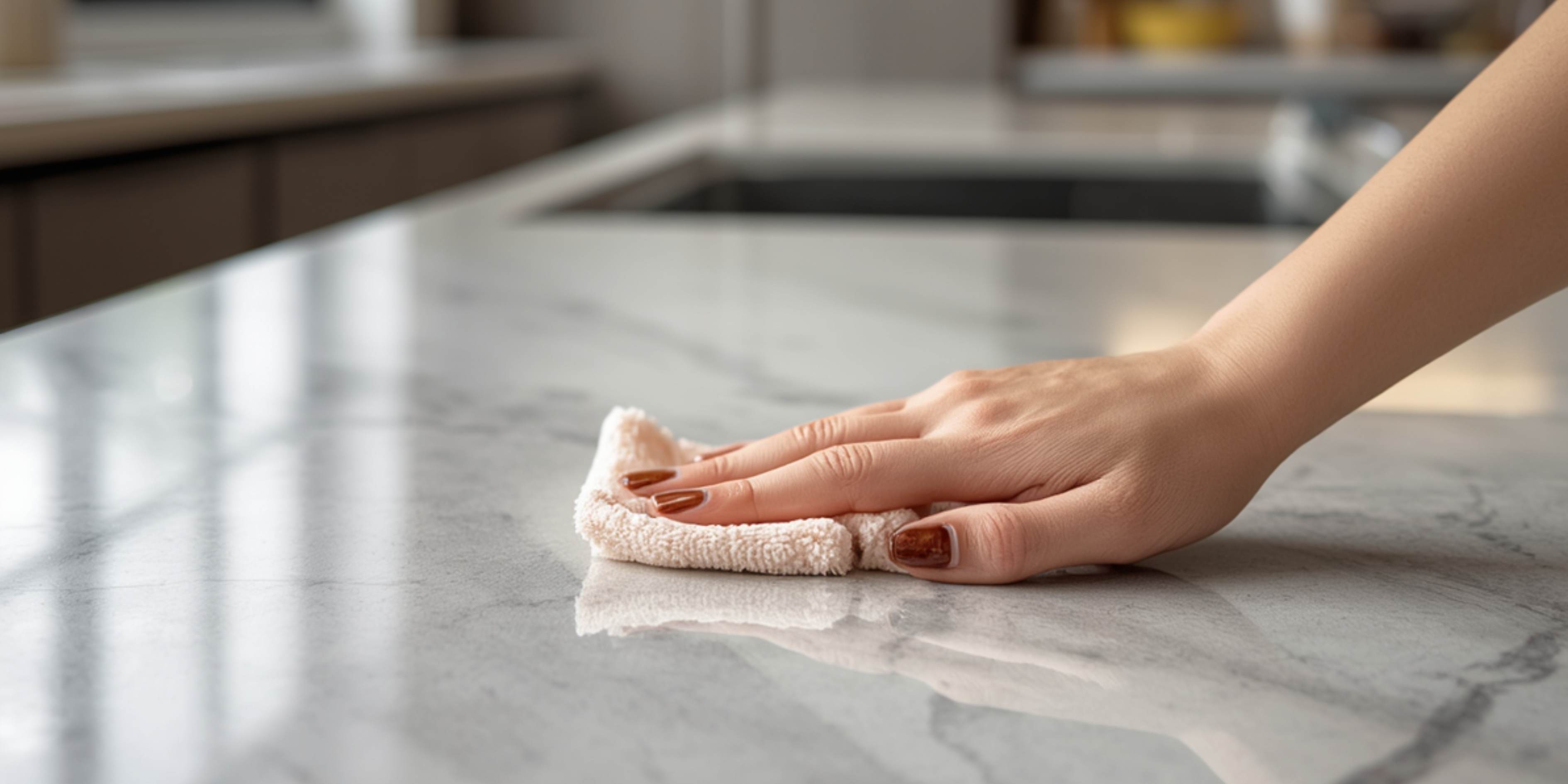
Daily Maintenance: Your basis daily cleaning
For everyday cleaning, start with the simplest approach.
Step 1: Remove Loose Dirt
Use a soft cloth or microfiber cloth to remove crumbs, dust and loose debris.
Step 2: Use a Suitable Stone Cleaner
Use a cleaning solution recommended for the specific stone material.
Avoid assuming that a general household cleaner is safe for every stone surface. Natural stones do not last long with acidic cleaner!
Step 3: Wipe the Surface
Clean the surface gently using a soft cloth or sponge.
Step 4: Remove Residue
If required, wipe the surface again with clean water to remove cleaning residue.
Step 5: Dry the Surface
Use a clean, dry microfiber cloth to prevent water marks and residue.
Regular light cleaning is usually preferable to allowing grease, food residue and spills to accumulate.
How to Remove Common Stone Stains
Different stains may require different approaches.
The first step should always be identifying:
The stone material
The type of stain
The surface finish
Whether the stone is sealed
Stain Type 1: Coffee Stains
Start with a suitable stone-safe cleaner and a soft cloth.
Avoid aggressive scrubbing.
If the stain remains, check the manufacturer's recommended stain-removal method before using a stronger cleaning chemical.
Stain Type 2: Oil and Grease
Use a suitable degreasing or stone-safe cleaning product according to the manufacturer's instructions.
Do not leave heavy grease residue on the surface for extended periods.
Stain Type 3: Food and Sauce Stains
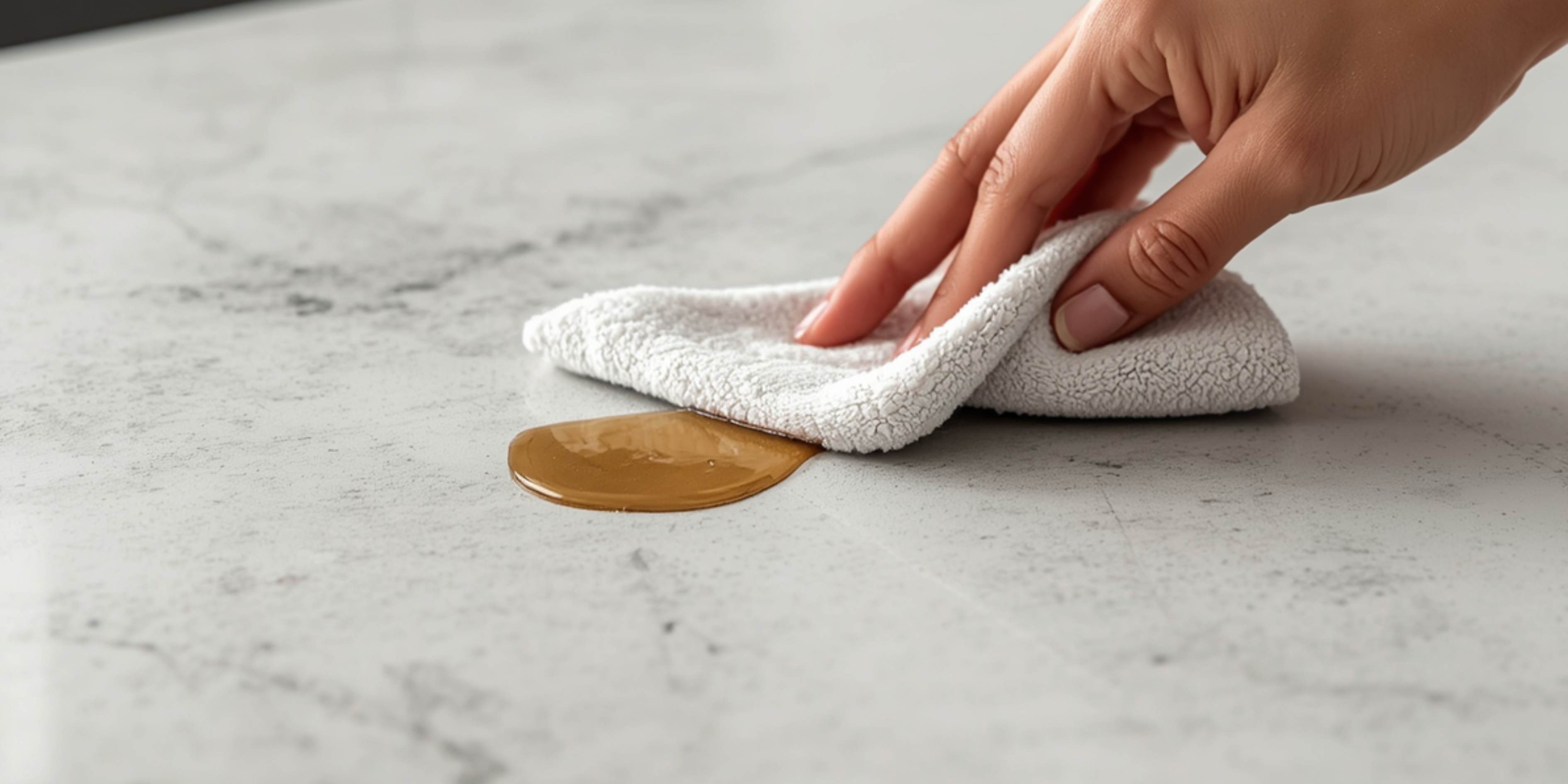
Common kitchen spills such as sauces, curry, wine or coloured food should ideally be wiped as soon as possible.
For persistent stains, use a cleaner recommended for the specific stone material.
Stain Type 4: Gum or Sticky Residue
Sticky materials should be removed carefully rather than aggressively scraped with a sharp object.
A plastic scraper may help lift residue without unnecessarily damaging the surface.
For chemical-based stain removal, always confirm compatibility with the stone manufacturer or supplier first.
Can You Use Thinner or Strong Solvents on Stone?
This is an area where homeowners should be particularly careful.
Do not assume that thinner, acetone or other strong solvents are safe for every stone surface.
Some stone products may contain resins, coatings or finishes that can be affected by aggressive chemicals.
Before using any solvent:
Identify the stone material
Check the manufacturer's cleaning instructions
Test on an inconspicuous area if the manufacturer permits
Consult your stone supplier if uncertain
A cleaning method that works on one material may damage another.
Does Stone Need to Be Sealed?
Not every stone surface requires sealing.
Sealing requirements depend on the material.
Natural stones such as some marble and granite products may require periodic sealing because they can be more porous.
Some engineered surfaces are designed to be low maintenance and may not require routine sealing.
The correct approach is therefore:
Do not seal a stone surface simply because it is stone. Check the product's sealing requirements first.
How Often Should Natural Stone Be Sealed?
There is no universal sealing schedule.
The required frequency can depend on:
Stone type
Porosity
Sealer used
Amount of usage
Cleaning practices
Location
Previous sealing treatment
Kitchen countertops that experience heavy daily use may have different maintenance requirements from a decorative feature wall.
A professional stone supplier can advise whether sealing is appropriate for the specific material.
How to Tell If a Stone Surface May Need Sealing
For suitable natural stone products, one commonly used approach is to observe how the surface reacts to water.
However, homeowners should avoid treating a simple water test as a definitive technical diagnosis.
If the surface appears to absorb moisture quickly or develops darkened areas, consult the stone supplier or a professional before applying a sealer.
What Cleaning Products Should You Avoid?
Unless specifically recommended for your stone, be cautious with:
Strong acids
Highly abrasive powders
Rough scouring pads
Aggressive chemical solvents
Unknown industrial cleaners
Bleach-based products not approved for the material
Highly alkaline chemicals
Acidic cleaners can be particularly problematic for calcium-based natural stones such as marble.
Always check product compatibility before applying a new cleaning chemical.
How to Prevent Stone Stains Before They Happen
Prevention is easier than stain removal.
Clean Spills ASAP
Don't allow coffee, sauces, oils and coloured liquids to sit on the surface unnecessarily.
Use Appropriate Cleaning Products
Choose products designed or approved for your particular stone.
Use Cutting Boards
Even durable countertops should not be treated as cutting boards.
Use Trivets Where Recommended
Although some stone products have high heat resistance, using appropriate trivets can still help protect the surface and surrounding materials.
Avoid Dragging Heavy Objects
Dragging heavy appliances or objects across the surface can cause scratches or damage to the surface or edge.
Follow the Manufacturer's Instructions
This is the most important maintenance rule.
Cleaning Routine we recommend for Malaysian Kitchen
A simple maintenance routine can make a significant difference and save cost in the long term.
Daily
Wipe spills
Remove food residue
Clean the surface with an appropriate product
Weekly
Perform a more thorough cleaning
Check areas around sinks and appliances
Remove grease build-up
Periodically
Inspect natural stone for signs that sealing may be required
Check joints and silicone areas
Inspect edges and cut-outs
Follow the manufacturer's recommended maintenance schedule
When Should You Call a Professional?
Professional assistance may be appropriate when:
A stain cannot be removed using the recommended cleaning method
The surface has become dull
There are scratches or chips
A natural stone appears to require resealing
A chemical has accidentally damaged the surface
You are unsure which cleaning product is safe
Trying multiple chemicals without knowing the stone type can sometimes make the problem worse.
Frequently Asked Questions
What is the best way to clean a stone countertop?
Use a soft cloth and a cleaning product that is suitable for the specific stone material. Avoid abrasive cleaners and unapproved chemicals.
Can I use normal household cleaner on stone?
Not necessarily. Some household cleaners may contain acids, abrasives or chemicals that are unsuitable for certain stone materials. Check the manufacturer's recommendations first.
Does quartz stone need sealing?
Many quartz stone products are designed to be low maintenance and do not require routine sealing, but requirements can vary by product. Always follow the specific manufacturer's instructions.
Does natural marble need sealing?
Some natural marble surfaces may benefit from sealing because marble can be porous. The appropriate sealing method and frequency depend on the specific stone.
Can I use vinegar to clean marble?
It is generally advisable to avoid acidic cleaners such as vinegar on marble because acids can react with calcium-based stone and damage the surface.
Can I use thinner to remove stains from stone?
Do not assume thinner is safe. Strong solvents can affect certain stone surfaces, resins, coatings or finishes. Check with the manufacturer or stone supplier before using any solvent.
How do I remove coffee stains from a stone countertop?
Start with a stone-safe cleaning method recommended for your specific material. If the stain remains, consult the manufacturer's stain-removal instructions or a professional stone supplier before using stronger chemicals.
How often should stone countertops be sealed?
There is no universal schedule. Some natural stones may require periodic sealing, while many engineered surfaces do not. The material and manufacturer's recommendations should determine the maintenance schedule.
Keep Your Stone Looking Its Best
A well-maintained stone surface does not require complicated daily care.
The key is understanding the material, using the correct cleaning method and avoiding chemicals that may damage the surface.
Whether you are selecting quartz, sintered stone, granite or natural marble for a new project, maintenance requirements should be considered before making your final material decision.
A trusted stone supplier to call for assistance or clarification must be within your consideration. If your supplier doesn't pick up the phone after supply, you risk getting a spoiled surface and cleaning at your own risk.
Need Advice on Stone Selection and Maintenance?
Casero Stone supplies a wide range of quartz stone, sintered stone, natural stone, granite and other stone surface solutions for residential and commercial projects across Malaysia.
Speak with our team about the appropriate material, application and maintenance requirements for your project.
Contact Us for Project Consultation, Material Samples or Technical Advice.