
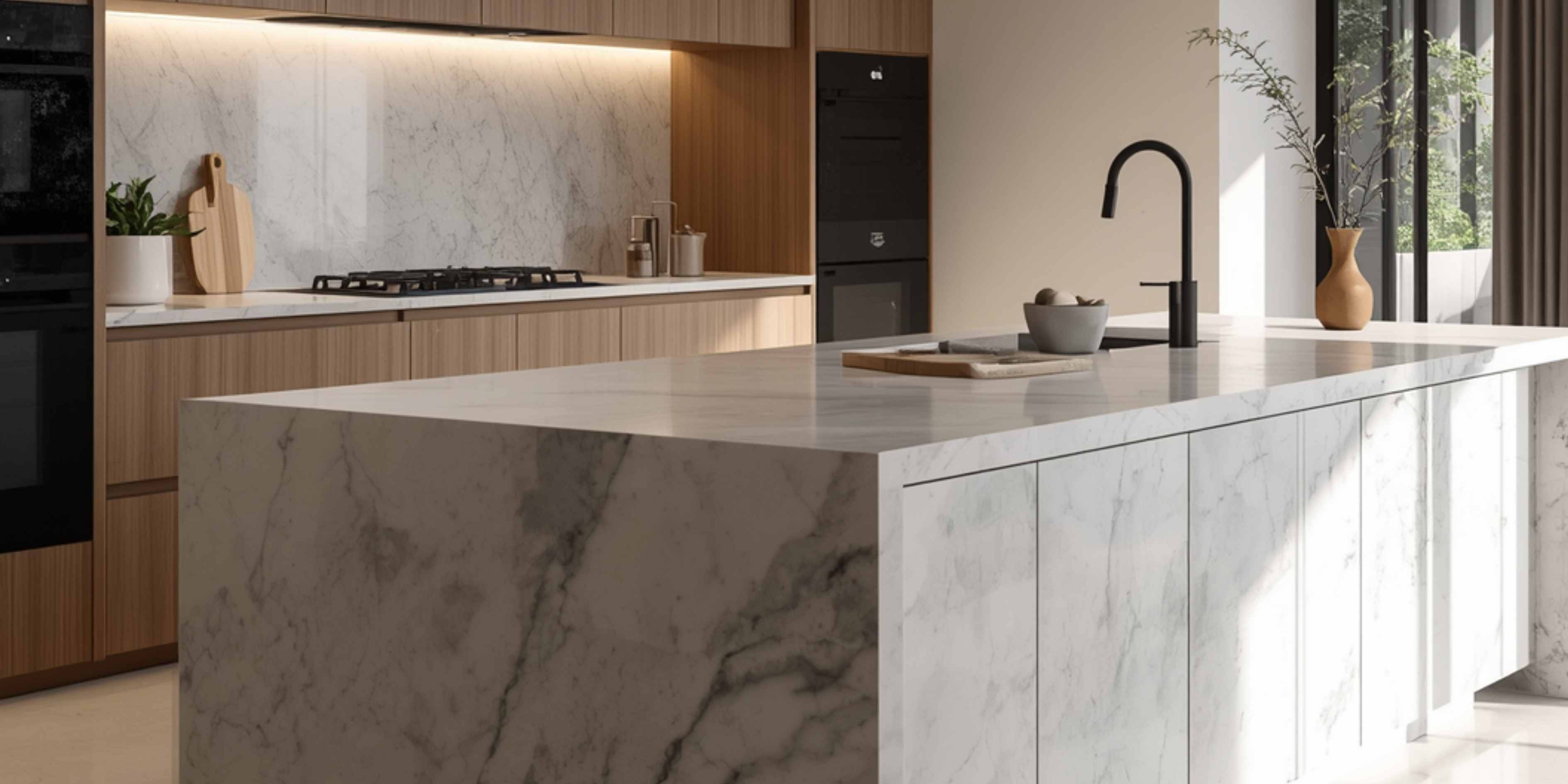
Stone Slab Thickness Guide: (6mm, 9mm, 12mm, 15mm and 20mm) – Which Should You Choose?
Choosing the right stone slab thickness is an important part of planning a kitchen countertop, island, vanity, feature wall or furniture surface. While 6mm, 9mm, 12mm, 15mm and 20mm are commonly encountered thicknesses, the thickest option is not automatically the best choice for every project.
The right stone slab thickness depends on the stone material, application, slab size, support structure, edge profile, fabrication method and the manufacturer's technical specifications.
For contractors, interior designers and homeowners in Malaysia, understanding the difference between different thickness of stones can help ensure the selected material is suitable for both the design and practical requirements of the project.
Why Does Stone Slab Thickness Matter?
Stone thickness can influence fabrication, handling, installation and the overall visual character of a project.
Some of the key considerations include:
- Strength and rigidity: Thickness can contribute to the rigidity of a slab and affect overall performance.
- Weight: Thicker slabs are generally heavier and will require extra care during transportation and installation.
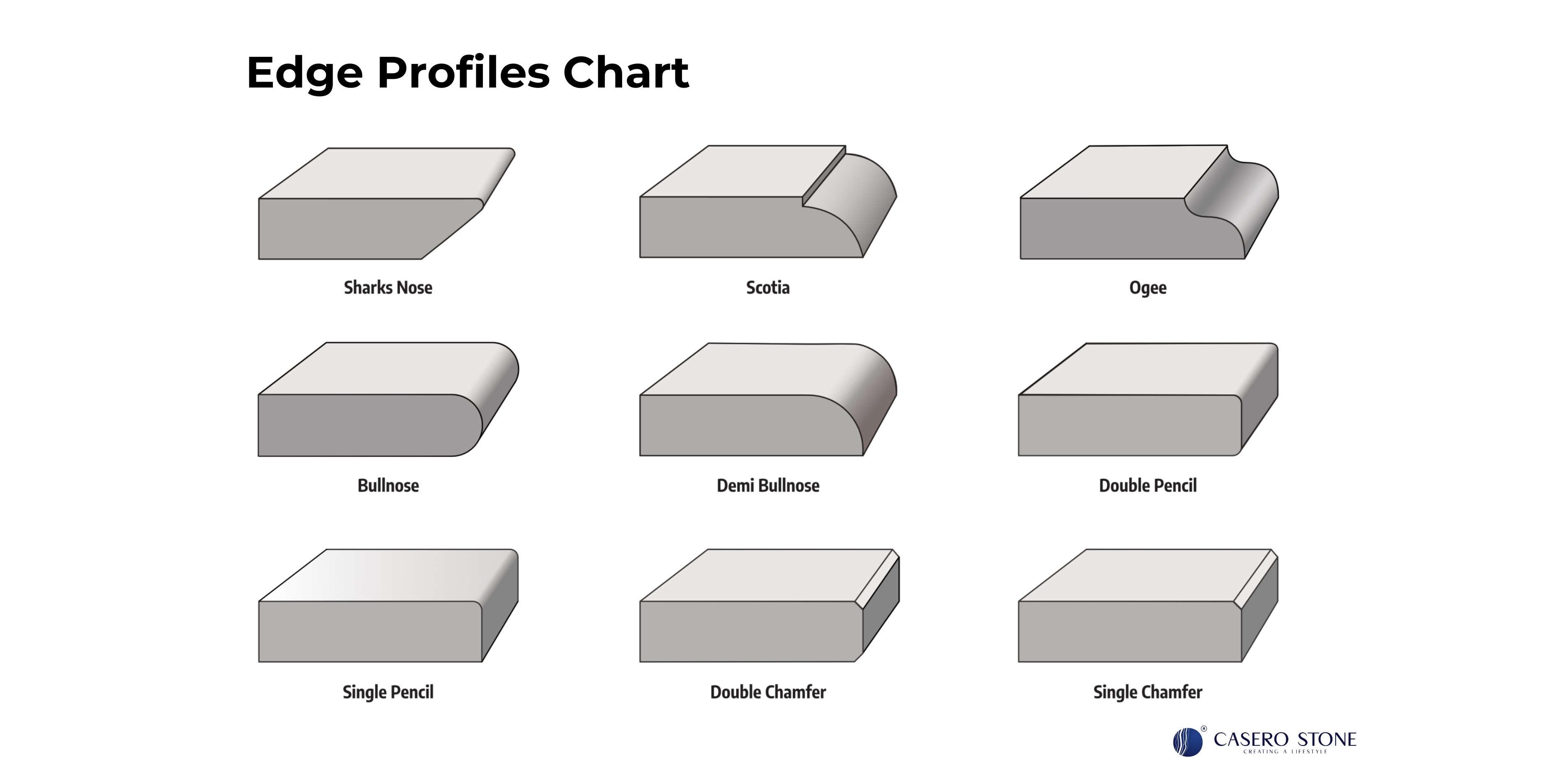
- Edge profile: Different thicknesses provide different possibilities for creating visible or detailed countertop edges. We will discuss this topic later in this article.
- Fabrication: Cutting, drilling, polishing and creating cut-outs require appropriate fabrication methods.
- Installation: The application and support structure need to be considered before selecting a slab thickness.
- Aesthetic: A thin slab can create a contemporary, lightweight appearance, while a thicker profile can create a more substantial look.
In short, stone thickness should be selected based on the complete project specification, rather than thickness alone.
Which Stone Thickness Should You Choose?
Your choice depends heavily on the material type and where it is being installed:
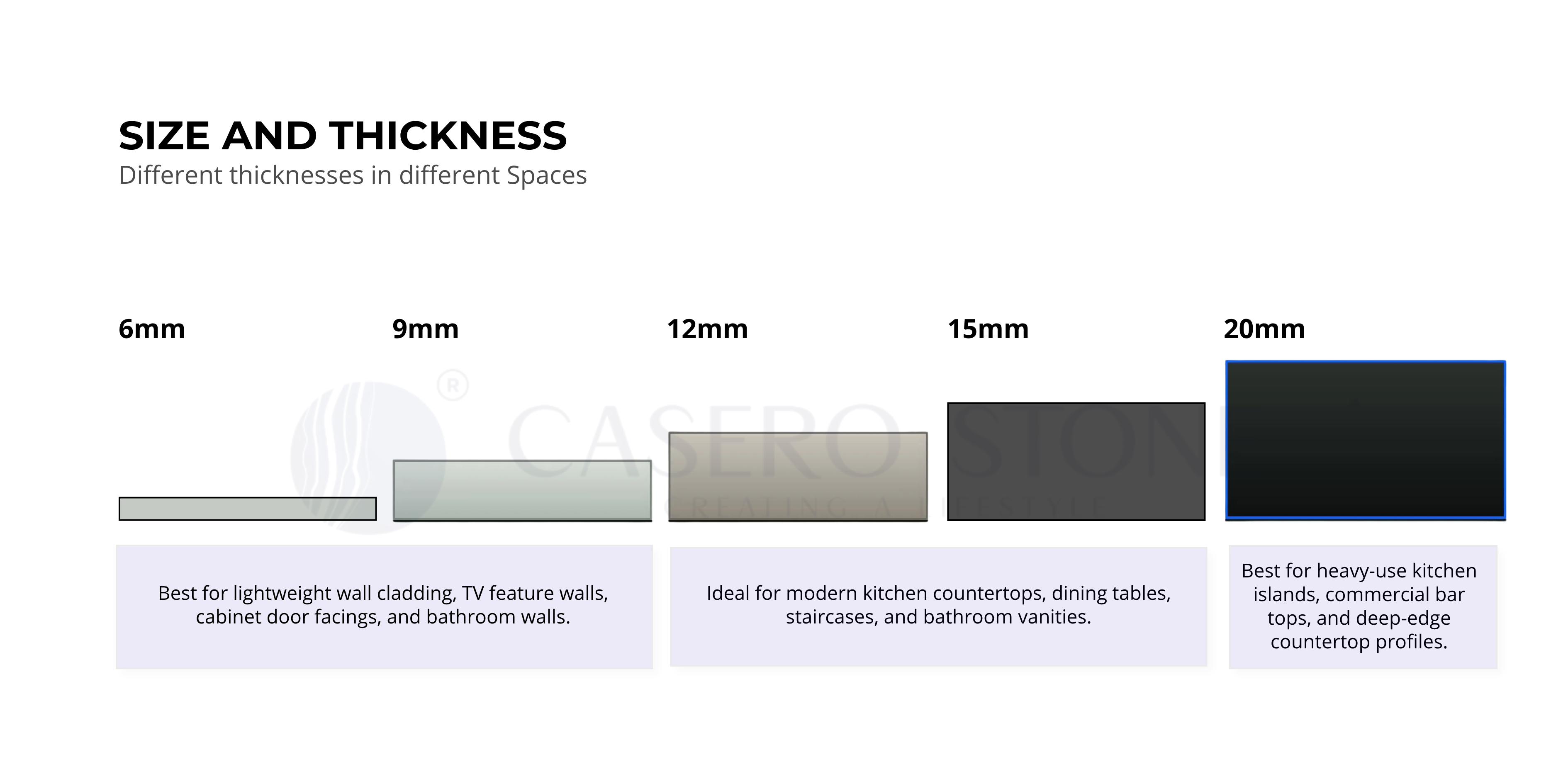
| Thickness | General Characteristics | Potential Applications |
|---|---|---|
| 6mm – 9mm | Ultra-Slim | Best for lightweight wall cladding, TV feature walls, cabinet door facings, and bathroom walls. |
| 12mm – 15mm | Slim & Versatile | Ideal for modern kitchen countertops, dining tables, staircases, and bathroom vanities. |
| 20mm | Substantial & Bold | Best for heavy-use kitchen islands, commercial bar tops, and deep-edge countertop profiles. |
Actual suitability should always be checked against the specific stone manufacturer's technical specifications.
Casero Stone Technical Thickness Range
Different materials require different structural thicknesses. At Casero Stone, we offer precise thickness configurations engineered specifically for material performance:
| Material Type | Available Thicknesses | Primary Best Uses |
|---|---|---|
| Sintered Stone | 6mm, 9mm, 12mm, 15mm | Wall cladding (6–9mm), Countertops, Islands & Stairs (12–15mm) |
| Premium Quartz | 15mm, 20mm | Heavy-duty kitchen tops, Waterfall islands, Commercial surfaces |
Breaking Down Each Thickness Option: When Should You Choose It?
1. 6mm & 9mm Sintered Stone (Ultra-Thin & Lightweight)
Thinner sintered stone are engineered specifically to eliminate unnecessary structural weight while delivering a 100% heatproof and scratch-resistant finish.
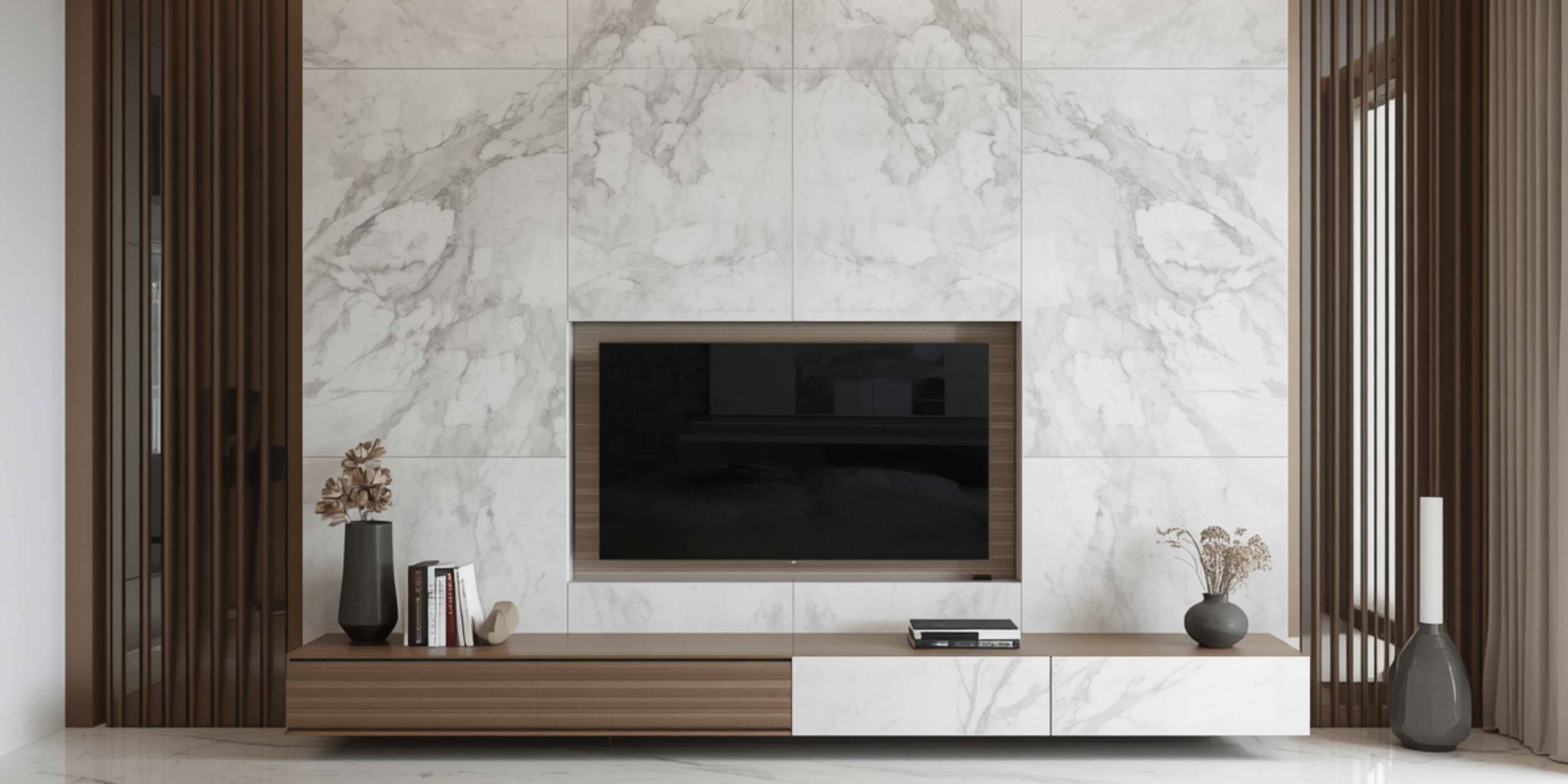
- Best Applications: TV feature walls, bathroom wall cladding, exterior building facades, and custom cabinet door overlays.
- Why Choose It: Extremely lightweight. It can often be clad directly over existing tiles without heavy structural hacking or specialized floor support.
2. 12mm Sintered Stone (The Contemporary Favorite)
12mm is the sweet spot for modern, minimalist design. It offers incredible structural density without the bulky footprint of traditional stone.
- Best Applications: Modern kitchen countertops, custom dining tables, floating bathroom vanities, and staircase cladding.
- Why Choose It: Gives a sleek, European profile while retaining high impact and heat resistance.
3. 15mm Sintered Stone & Quartz (The Balanced Workhorse)
Slightly thicker than 12mm, a 15mm slab provides an ideal middle ground between slim contemporary aesthetics and solid visual weight.
- Best Applications: Heavy-use kitchen countertops, central islands, and high-traffic furniture tops.
- Why Choose It: Offers superior edge profile durability and extra rigidity for larger slab spans with sink or hob cut-outs.
4. 20mm Premium Quartz (The Substantial Statement)
For projects requiring a bold, solid presence, 20mm is the gold standard for engineered quartz.
- Best Applications: High-impact kitchen islands, waterfall edges, reception counters, and commercial bar tops.
- Why Choose It: Allows for dramatic edge profiles (such as Bullnose or Ogee) and gives a heavy, luxury feel to the kitchen island.
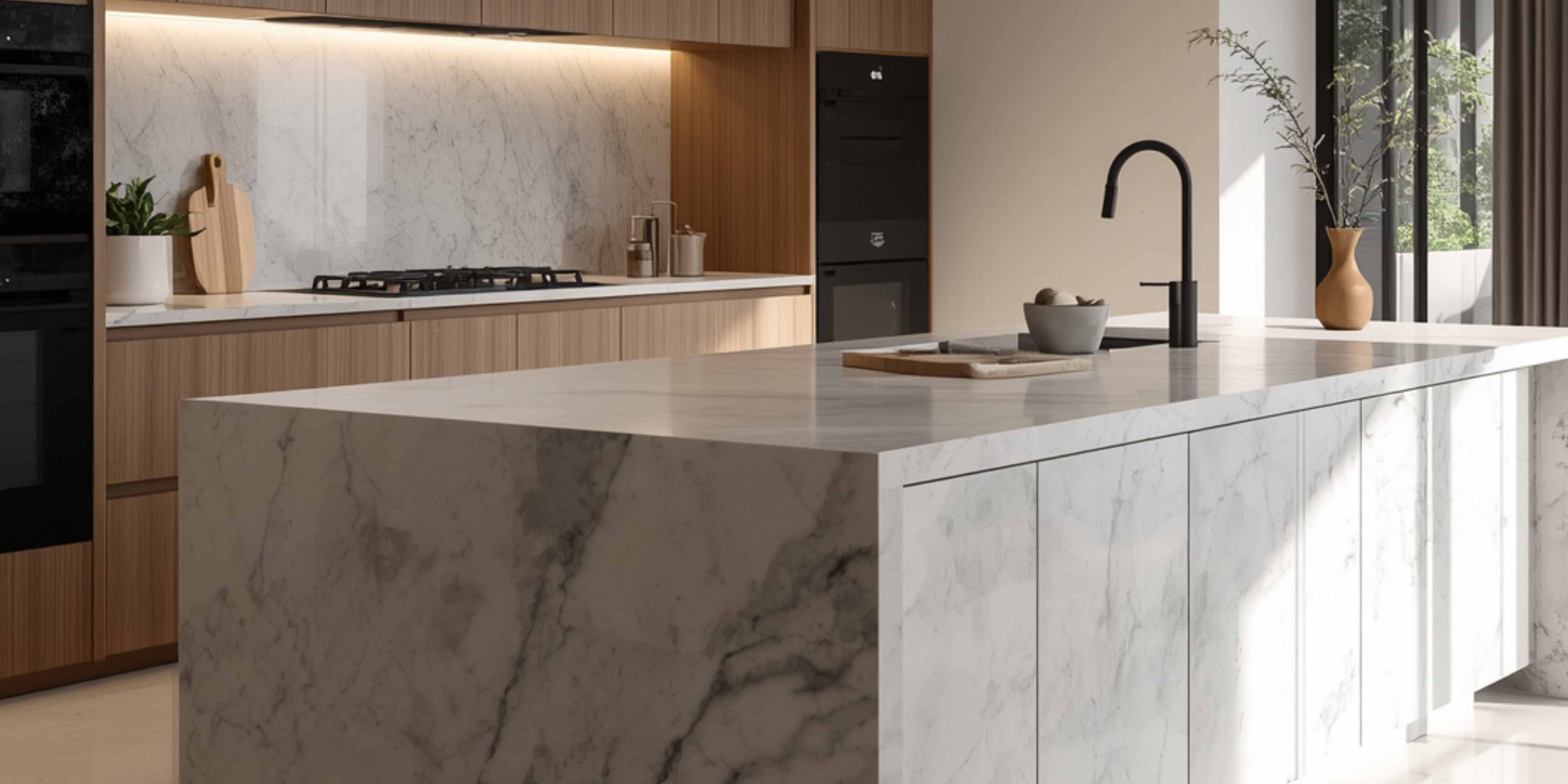
[Image Suggestion: A luxury kitchen island made of 20mm Premium Quartz with a waterfall mitered edge.]
- Alt Text: 20mm premium quartz kitchen island with waterfall edge in a modern kitchen.
- AI Photo Prompt: A high-end kitchen with a large center island made of 20mm thick white quartz with deep marble veining. The edge drops down to the floor in a seamless waterfall mitered joint.
Does Thicker Stone Always Mean Stronger Stone?
No. A thicker stone slab is not automatically stronger or more suitable for every application.
The overall performance of a stone surface depends on several factors, including:
- Type of stone
- Material composition
- Manufacturing process
- Slab dimensions
- Support structure
- Cut-outs
- Fabrication quality
- Installation method
- Intended application
For example, a technically suitable 12mm sintered stone product may be appropriate for an application where a particular 20mm product is unnecessary.
The important question is therefore not simply:
"Which is the thickest stone?"
It is:
"Which thickness and material are specified for this particular application?"
Scenarios: What Stone Thickness Should You Choose for Different Applications?
| SCENARIO | APPLICATIONS |
|---|---|
| Kitchen | Kitchen CountertopsKitchen countertops need to withstand daily use, cooking activities, cleaning and impact. The appropriate thickness depends on the stone material, countertop dimensions, support structure, cut-outs and edge design. Kitchen IslandsLarge kitchen islands require additional consideration because of their size and potential overhangs. The slab thickness should be evaluated together with:
|
| Bathroom | Bathroom VanitiesBathroom vanity tops generally have different requirements from kitchen countertops. Slimmer profiles may work well for contemporary bathrooms, but the selected material and installation method still need to be considered. |
| Dining Area | Dining Tables and FurnitureStone can be used to create dining tables, coffee tables, side tables and other furniture surfaces. The appropriate thickness depends on the slab material, table dimensions, support structure and desired appearance. |
| Spaces | Feature WallsFeature walls are often suitable for large-format stone applications where the visual objective is to create a continuous surface with minimal joints. In these applications, thickness, weight, fixing method and wall structure are important considerations. StaircasesStone staircase applications require careful consideration of dimensions, support, edge details, fabrication and installation. |
Contractors Checklist for Choosing Stone Thickness
Before placing an order, contractors and designers should check more than just the thickness listed on a quotation. Here’s the checklist for things to look out:
| 1. Material Specification | Quartz, sintered stone, natural stone and other materials can have different technical characteristics. | ☐ |
|---|---|---|
| 2. Recommended Application | Check whether the selected product is suitable for the intended use. | ☐ |
| 3. Slab Dimensions | Large slabs can have different handling and structural considerations from smaller pieces. | ☐ |
| 4. Support Structure | Countertops, islands and furniture surfaces should have appropriate support. | ☐ |
| 5. Cut-Outs | Sink, hob and other cut-outs can affect fabrication and installation requirements. | ☐ |
| 6. Edge Profile | The desired edge treatment should be discussed before fabrication. | ☐ |
| 7. Installation Method | The fixing or installation method should be appropriate for the material and application. | ☐ |
| 8. Manufacturer's Technical Data | Always refer to the product's technical specifications when making a final material decision. | ☐ |
Frequently Asked Questions
What is the standard thickness of a stone countertop?
There is no single universal standard thickness. Common options include 12mm, 15mm and 20mm, depending on the stone material, manufacturer and application.
Is 12mm stone thick enough for a kitchen countertop?
Yes, it can be suitable for certain applications, depending on the specific stone product, support structure, dimensions and manufacturer's specifications. It should not be assumed suitable for every countertop.
Is 20mm stone better than 12mm?
Not necessarily. A thicker slab can provide a more substantial appearance, but the appropriate thickness depends on the material and application.
What thickness is best for a kitchen island?
The appropriate thickness depends on the island dimensions, stone material, support structure, overhang, cut-outs and desired edge profile.
Does stone thickness affect the price?
Yes, it can. Material consumption, fabrication, transportation and installation requirements may vary according to thickness and product. Project pricing should therefore be evaluated based on the complete specification.
Should contractors choose the thickness or the stone supplier?
The best approach is to discuss the application with the stone supplier, fabricator and relevant project professionals. The final specification should be based on technical requirements rather than appearance alone.
Need Help Choosing the Right Stone Specification?
Every project has different requirements.
Whether you are specifying stone for a kitchen countertop, island, staircase, feature wall or commercial project, Casero Stone can help you evaluate the suitable material, thickness and application based on your project requirements.
Request Technical Specifications or Material Samples
Discuss your project requirements with Casero Stone's professional team.
You may request a catalog from us.